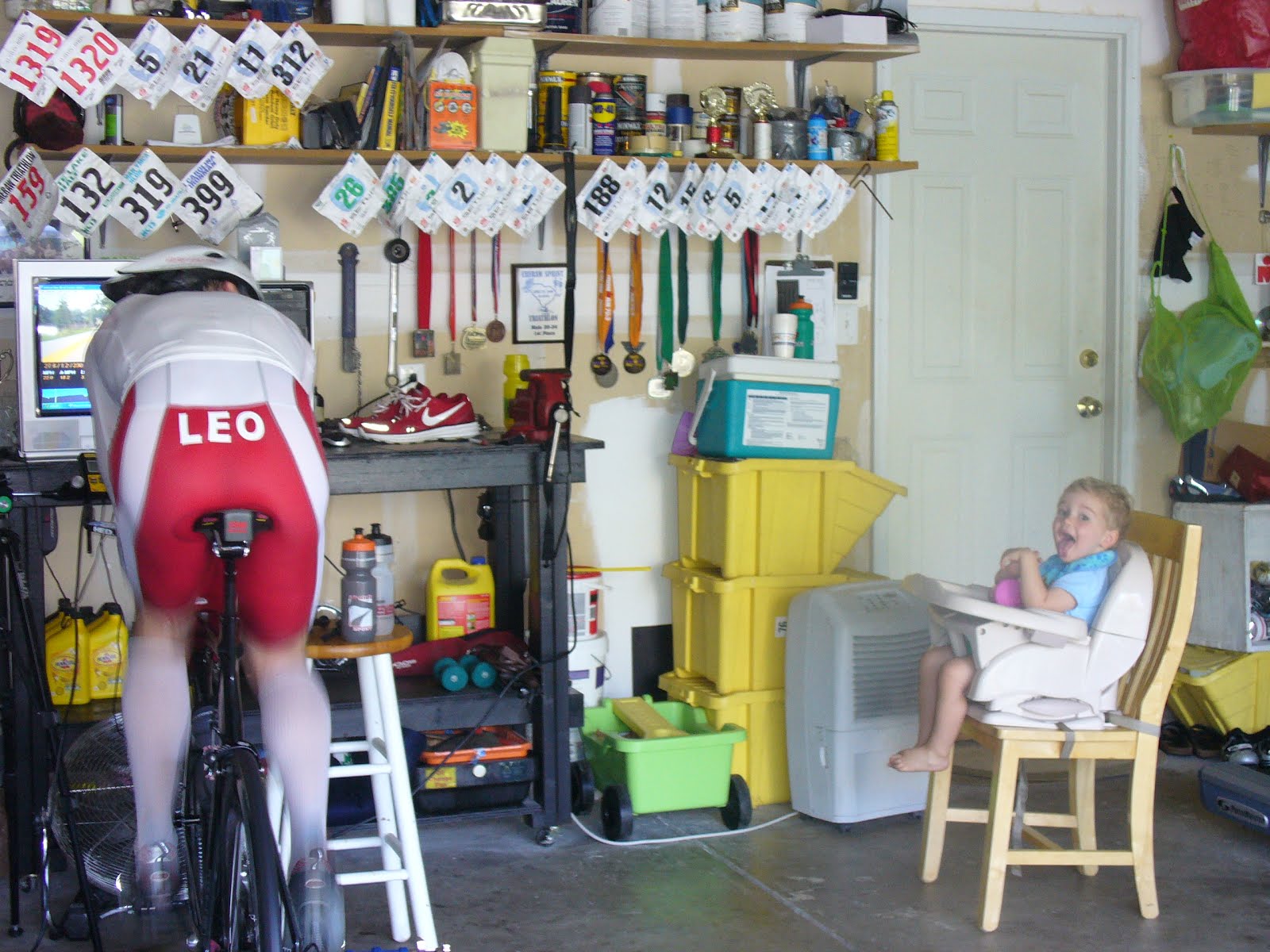
Can you complete/compete at the 140.6 distance w/ only 10 hrs of training per week?

Tuesday, November 20, 2012

TEAM Tri 2012 - Life Time Fitness

I am super excited to announce that I will be driving the first TEAM Tri program at Life Time Fitness (LTF) -  St Louis Park. For some of you this is old news while for some this is brand new intel. In the past LTF has attempted to launch similiar programs, but ongoing traction was not maintained for the long haul. I am poised and determined to make this program not only top notch, but one that will grow from one season to the next. Below is a quick overview of what this specific TEAM program will offer to participants:
  • Three workouts per week with seasoned multisport coach
    • Tuesday - 530 to 630 AM - Swim workout
    • Thursday - 530 to 630 AM - Bike/Run or 'wildcard' workout
    • Saturday - 800 to 900 AM - Bike or Run 
  • FREE TrainingPeaks (TP) account 
  • 3 FREE Spinerval DVDs for those who register by December 1, 2012
  • Additional specifics
    • WHO: 1st time triathletes looking for a sound periodized training plan
    • WHAT: Year round training with a group of like minded athletes that targets specific events
    • WHY: build comradarie, accountability, need a goal to work toward, etc. 
    • WHERE: Life Time Fitness - St. Louis Park
      • As weather permits we will be venturing outdoors to swim, bike, and run
      • Open water swims at Cedar Lake
      • Race simulation workouts at race sites noted above
    • COST: $175/month on EFT 
Please connect with me personally at lleo@lifetimefitness.com with any questions regarding this program. If you would like to get to know me please take a moment to read the following article written several months ago: 

http://lifetimefitness.mylt.com/community/personal-training/blog/2012/09/14/coach-lance-leo-triathlon-and-endurance-coach

I look forward to working with 15 select athletes in 2012/2013! Contact me asap to get your spot!

Train smart, think big!
Coach L

Friday, October 5, 2012

Twin Cities Taper 2012 - Part 2

For the past 10 years I have played with blood lactate testing. In this time I have come to learn much about how to use such testing to my advantage and for my athletes. There are deferring opinions on how to use this method, but I have come to trust the Lactate Balance Point (LBP) as my go to. For additional insight on this method I would encourage you to read a post that dates back to 2010; http://ironmanin10.blogspot.com/2010/10/lbp-and-imf-2010.html.

From the LBP my interest and awareness of how blood lactate responds to varying workloads I executed a run pace validation test this week.

The key behind this test was to evaluate blood lactate within controlled settings (treadmill) and then variable settings (outdoors). The goal was to see if there was a strong correlation between blood samples against the same relative workloads. The findings were outstanding. Before I present the data I do expect some to question the duration of the test. Meaning, some would prefer (including myself) to run this test for 45 to 60 min to enhance its validity. Being that I was days from Twin Cities (TC) I opted to save the legs and see if such a short test could serve clients well. I am a 'lab rat' and love to test myself before testing others. Plenty more testing and analysis to come friends.

So, here is what I found:

3-Oct-12  [Gas, L, Field] 11:29 AM
RQ HR* Fat% L
Tmill 5 0.878 157 39.07 2.1
Tmill 10 0.898 147 32.38 2.2
Field 5 NA 156 NA 1.8
Field 10 NA 158 NA 2.0
Averages 0.89 154 35.73 2.03

As you can see, lactate maintained relatively constant despite changing testing location; treadmill vs. outdoors (2.03 average). I drew blood from my finger at 5 and 10 min into each run. I opted to run on the treadmill first and then run outdoors on Cedar Lake Road at 6:30 min/mile pace. An out and back format was used for simplicity purposes. RQ increased slightly, HR was relaitve stable (despite one outlier of 147 bpm), and fat utilization dropped by ~8% within the 10 min testing block.

I was encouraged to see that the overall trending from inside to outside showed a decrease in lactate accumulation. It is important to note that it took about 5 minutes to get outdoors and to initiate the Field 5 and 10 testing. Lactate clearance likely took place during this time, thus the need to pull blood at 5 min into the run and not earlier. If my blood lactate went from 2.1, 2.8, 3.0, and then to 3.5 mmol I would certainly have to re-evaluate my goals for Sunday. Per the response noted above (and in the previous post) I will be goal setting a 6:30 to 6:50 marathon pace for TC 2012.

To further strengthen this kind of testing I will certainly increase duration and frequency of blood draws. That will take place post the recovery block that I plan to take per TC.

I look forward to seeing how this testing and the other tests that I have conducted leading up to TC will pan out. I have not addressed the relevance of muscluar endurance and fatigue resistance. For the record, I have done little to no strength training for TC 2012. It will be very interesting to see how/when/if this will come back to get me at mile ~18 to 23.

Super excited to see where things go this weekend for Anne and I. As noted previously, we raced side by side back in 2002 to earn a BQ slot for her. Life has us in a completely different place now so 'going fast' is not the goal for Annie. Faster days await her for sure. I am proud to say she has devoted her time and energy to being a rockstar Mom and wife.

Check back on Tuesday (Oct 9) of next week for my thoughts on how the day went down.

Embrace the day,
Coach L

Tuesday, October 2, 2012

Twin Cities Taper 2012 - Part 1

It has been some time since I have posted and thought no better time then now to touch base with the world. The family and I have successfully relocated to St Louis Park, MN and are adjusting to our new life here.

To stay inline with the jist of this blog I thought it appropriate to share my thoughts on the Twin Cities marathon that will take place this Sunday (Oct 7, 2012). Anne and I both ran this race 10 years ago. The goal was for her to qualify for Boston and I was to assist her in this endeavor. She achieved the qualifying part, but never got to run Boston per blowing out her knee, which required micro fracture surgery. That is a post in and of itself. 

Ten years later and here we are just days away from engaging this course again. Kind of exciting. Our training for this event has been subpar to say the least. Again, good content for a later post. 

Being the science guy that I am I will share briefly on how I am going to approach this race and why. 

On Sunday I plan to run 26 plus miles at a pace that could put me in the 2:45 to 2:55 range. With the help of gas exchange and lactate testing I feel confident that this is possible. Think big, dare to fail, and trust in the Lord. I like that triplet. 

Here is some data to chew on for those who like to evaluate numbers and make sense of it all. The data below reflects using gas exchange tesing equipment as pictured here. 


I have become a 'gas exchange' junky since moving to MN. It has become commonplace for me to don the mask (blue mask seen above) and test myself at least one time per week at Life Time Fitness. Again, good material for another post. 

Enter my good friend RQ (Respiratory Quotient). RQ helps validate at any given time how much fat and how much carbohydrate (CHO) the body is using to produce energy. If one sees an RQ value of .7 he or she is metabolizing much more fat then CHO. On the flip side, if one sees an RQ value of 1.0 (or higher) it can be determined that he/she is metabolizing CHO predomintly to create energy. The happy medium of .85 reflects a substrate use of ~50% CHO and 50% fat. Pretty simple stuff that can easily be applied to one wanting to race faster and more efficiently to the person wanting to lose 100 pounds. 

September 21, 2012
Protocol: 4 x 10 min at 9.2 MPH or 6:31 min pace (~2:50 marathon) w/ 2 min recover at 2.5 MPH between each 10 min effort (all at 1% incline).

21-Sep12
RQ HR Fat%
Stage 1 0.88 157 39.57
Stage 2 0.89 162 37.71
Stage 3 0.89 165 37.71
Stage 4 0.88 161 38.33
Averages 0.89 161 38.33


September 28, 2012
Protocol: one less stage per limited time

28-Sep-12 Gas Only
RQ HR Fat%
Stage 1 0.84 155 52.86
Stage 2 0.85 158 50.43
Stage 3 0.84 156 51.64
Averages  0.84 156 51.64


As you can see in just one week there was a SIGNIFICANT change in fat utilization at the same intensity. A 34.7% increase is pretty legit and at an HR that is about 5 beats lower. How could this happen in just 1 week? Was it the taper? Was it the rest? Or was it that I did not eat ice cream like it was my business for a whole week? 

Here is the answer. On September 17 I ran my one and only long run for Twin Cities, which ended up being 23.43 miles. I got lost being the new guy on the block and under estimated the distance around Lake Harriet. Below you will find the nitty gritty of this little adventure:


My slow twitch muscle fibers (STF) were likely still exhausted and recovering being that they were only 4 days post the 23 miler. STF were used predominatly for this 2:30 hr run and one could hypothesize that they were still tired. Therefore, the body relied more on fast twitch fibers (FTF) or their transitional counterparts (Type 2 a, b, x) to work through these 10 min stages. These fibers rely more on CHO or glycogen stores then fat as fuel. Thus, the higher RQ values seen. 

7 days later and the numbers were completely different against the same workload. Legs were more rested and the body was ready to meet the workload with more STF then FTF substrates. Kind of cool to see the value of tapering / resting in just one weeks time. The power of tapering well?

This post is getting a bit long. This Friday (Oct 5) I will add additional evidence that science can certainly help validate your goals. Meaning, one should avoid going into any event blindly. Come back Friday and I will share blood lactate numbers that compliment these findings. I love this stuff. 

Train smart and think big, 
Coach Lance