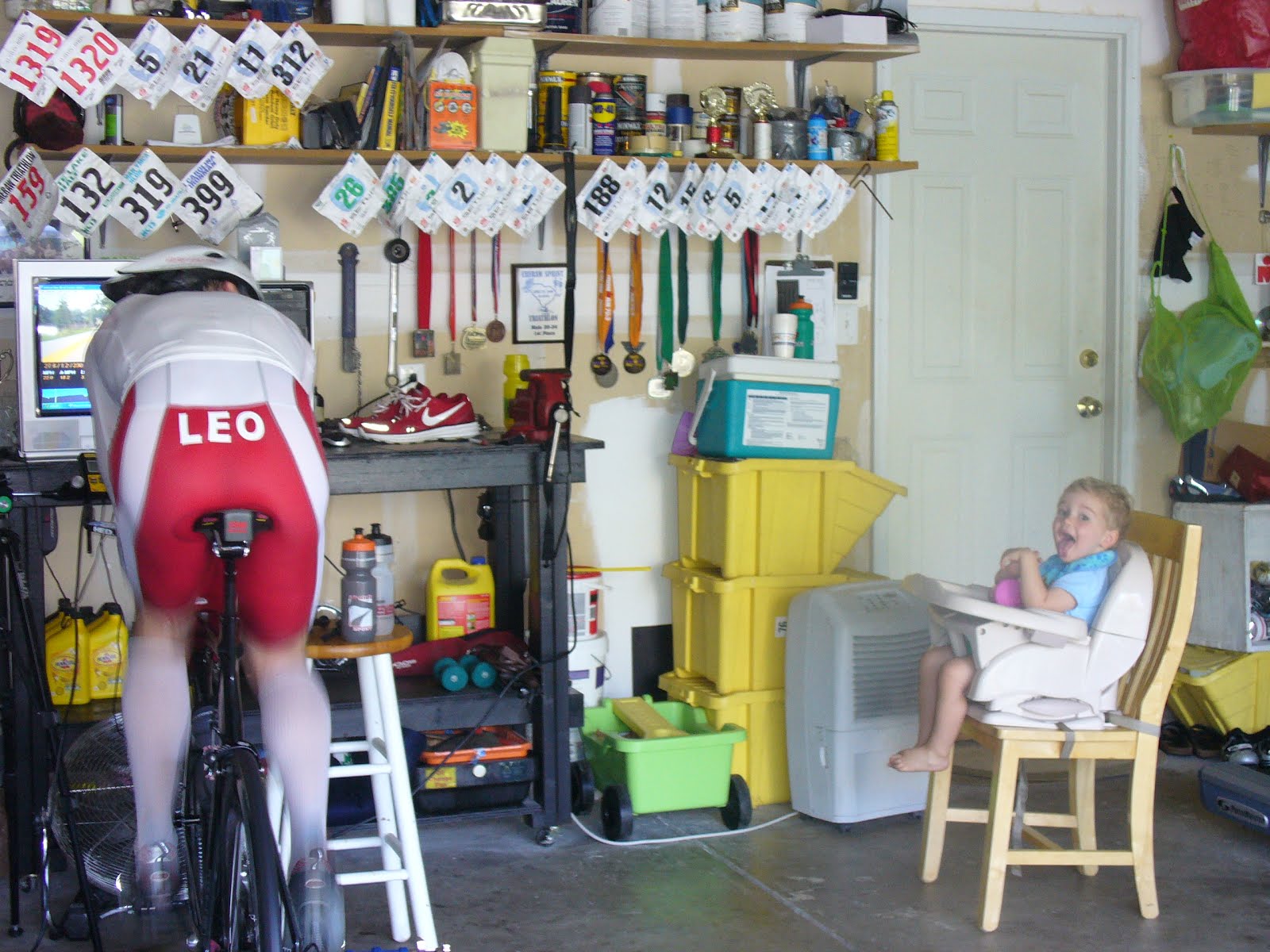
This week I re-entered the training world (sick for two days) with a workout that mixed a taste of FTP and neuro work on the run. With only an hour to work with I opted to hit the following:
7 x 3 min @ 300 watts w/ 800 meter neuro focus efforts per
With the help of the CS 1.6 I created the work intervals noted above with a 2 min recovery at 100 watts. Each time I completed the 3 min efforts noted above I would press pause on the CT, dismount my battle wagon, and then throw on the Vibram KSO.
The fun twist to this transition to the run was trying to get those 'shoes' on fast AND place the Garmin Foot Pod on the dorsal side of the KSO. The fastest I was able to do was 27 seconds. I have seriously considered using the Vibram for a sprint like Cool Breeze, but still waivering.
Some key points here:
(1) I continue to see significant improvements in leg turnover when using he Vibram vs. my Nike Lunar Fly (or any other running shoe for that matter). As noted above, I did 7 x 800 and the first 7 were with the Vibram. Coincidentally, my average stride rate was 93 with them on and 90 for the last interval per the Lunar Fly being on board. I plan on doing additional sessions where I alternate KSO/Lunar to see if I can see similar trending.
Fatigue could have certainly played a role here, but take a look at the difference between the "V"s and the Nikes:
w/ Vs = 5:32/mile average pacing and 93.7 stride rate
w/ Nikes = 5:44/mile pacing and 90 stride rate
(2) Last point for the Vs. I was not attempting to go 'fast' at any point during these neuro focused 800 meter efforts (which were ITU style - see 2/16/11 post). The goal was to hone in solely on leg turnover. Speed comes with an optimal leg turnover. In other words, if I tried to throw down a 100 vs. a 94 I would have likely seen a slower overall pace and the energy cost would have been excessive. Moreover, if I pulled back the 'Fred Flinstone' legs (picture big Fred in his car using his legs to propel his stone age car) to 80 I know I would have been spending too much time on the ground per footstrike. Challenge yourself to spend less time on the ground per footstrike coupled with a slight forward lean and be prepared to go faster.
There is my brief case for Vibrams. Not exhaustive, but something to chew on.
WORD OF CAUTION: Please do not buy Vs and then go run 6 miles with them. Allow your feet and the skeleteal/muscular systems to adapt to them first. Walk around the house for a week or so and then go out for a 5 to 10 min run first. Please use common sense when using these.
Enjoy the training process friends,
Coach L